What has changed in recent years is not just the number of wildfires burning in Canada, but the fact that their smoke now reliably drives hazardous air quality for tens of millions of people across the U.S. Midwest and Northeast, turning transboundary pollution into a recurring public‑health reality rather than an occasional anomaly.
At a Glance
- Canadian wildfires now routinely push smoke into major U.S. population centers, triggering air quality alerts for 100+ million Americans.
- These events are part of a documented continental shift toward “smokier skies,” rooted in record Canadian fire seasons since 2023.
- Health risks come primarily from fine particulate matter (PM2.5), which can aggravate heart and lung disease and increase long‑term mortality.
- Alerts and precautions from agencies like Environment Canada, the National Weather Service, and health authorities reflect robust evidence, not a disputed narrative.
- The combination of smoke, heat waves, and public fatigue makes personal risk management and infrastructure adaptation an increasingly permanent concern.
From Local Fires to Continental Smoke Episodes
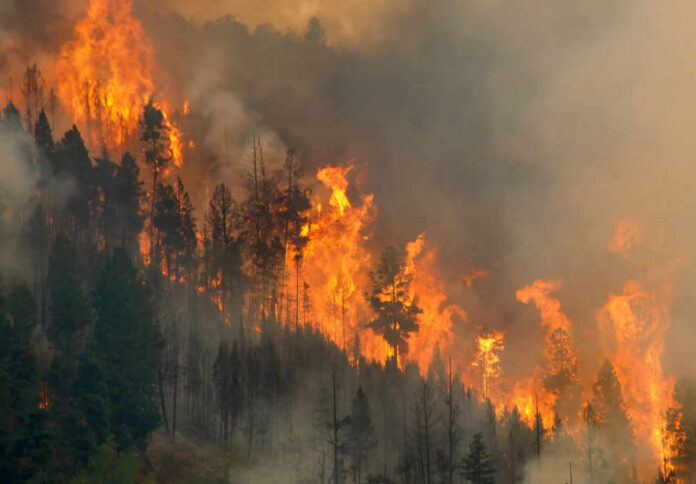
To understand why more than 100 million Americans can suddenly find themselves under air quality alerts, you have to start far from Chicago or New York—often in the boreal forests of western and central Canada. In 2026, Canadian fire agencies reported on the order of 800–900 active wildfires, with more than a hundred classified as “out of control,” a terminology used when suppression resources cannot contain the fire’s spread under prevailing conditions. These are not small campfires; they are large landscape‑scale burns producing towering smoke plumes that can reach the mid‑troposphere, where prevailing winds steer them thousands of kilometers.
Once lofted, the smoke is no longer a Canadian problem alone. Forecast centers such as NOAA’s National Air Quality Forecast Capability routinely show plumes arcing over the Great Lakes, dipping into the Midwest, and sliding along the Northeast corridor. When those plumes align with a stagnant high‑pressure system—as Michigan’s environment agency has described in recent episodes—the smoke accumulates rather than disperses, degrading air quality across multiple states for days at a time. This is how a fire you never see can suddenly make the air in your city objectively unhealthy to breathe.
A Record Shift: Why 2026 Is Not an Isolated Fluke
The current wave of alerts sits atop a clear, quantified trend: a fire‑driven shift in North American air quality that began to show itself dramatically in 2023. Multiple scientific analyses of satellite records, ground measurements, and weather observations conclude that the 2023 Canadian wildfire season was the most significant on record, by area burned and by smoke impact. One preprint led by atmospheric scientists notes that 2023 produced the highest number of “smoke” or “haze” reports in Canadian weather records, roughly double the previous peak in 1981 and seven times the long‑term baseline from 1953–2022. That is not a normal year with a bad week—it is a structural break.
Columbia Climate School’s synthesis of 70 years of air‑quality data describes a continent‑wide trend toward “smokier skies,” with Canadian fires now driving long‑range PM2.5 pollution events far more often than in the past. During the 2023 season, smoke from Canadian fires did not stop at the U.S. border; a Nature study documented plumes crossing the Atlantic and measurably affecting air quality in Europe and even parts of Asia. By the time we reach 2025 and 2026, NASA and NOAA case studies treat widespread smoke over the U.S. and Canada as an expected outcome of active Canadian fire seasons rather than a rarity. In this context, the 2026 episode is best understood as the fourth major smoke incursion in four years—a recurrence, not an exception.
Air Quality Alerts for Tens of Millions: What the Numbers Represent
When headlines state that more than 100 million Americans are under air quality alerts, they are not engaging in rhetorical flourish; they are summarizing coordinated advisories from the National Weather Service and state environmental agencies. During recent events, maps from the Weather Service and media aggregators such as Newsweek and Fox Weather show alerts stretching from Minnesota through Wisconsin and Michigan, across northern Indiana and Ohio, and into Pennsylvania, New York, New Jersey, and much of New England. In several cases, counts of people within the alert polygons reach 120–124 million.
These alerts are not merely aesthetic warnings about haze. They are keyed to the Air Quality Index (AQI), a standardized scale that translates measured concentrations of pollutants—primarily fine particulate matter (PM2.5) during smoke events—into categories relevant for health decisions. Values above 100 are considered “unhealthy for sensitive groups,” above 150 “unhealthy” for the general population, and values over 200 “very unhealthy” or “hazardous.” During the 2026 smoke incursions, cities such as Chicago, Detroit, and Minneapolis have repeatedly ranked among the worst in the world on third‑party platforms like IQAir, while official AQI readings have reached the “very unhealthy” and “hazardous” bands. A widely cited figure of 753 for Chicago’s AQI in one episode comes from localized monitoring and has yet to be independently reconstructed station‑by‑station, but it is consistent with the pattern of extreme readings across the region.
What Makes Wildfire Smoke Dangerous: The Role of PM2.5
The central hazard in these events is not the smell of smoke or the orange tint to the sky; it is the fine particulate matter embedded in the plume. PM2.5 refers to particles with diameters less than 2.5 micrometers, small enough to penetrate deep into the lungs and, in some cases, enter the bloodstream. Health Canada’s guidance and numerous epidemiological studies link elevated PM2.5 to exacerbations of asthma and chronic obstructive pulmonary disease, increased hospital admissions for heart and lung conditions, and higher rates of premature death.
Wildfire smoke is a complex chemical mixture: organic carbon, black carbon, volatile organic compounds, and trace metals, among others. A 2025 modeling and observation study in Atmospheric Chemistry and Physics showed that Canadian wildfire smoke episodes over the U.S. not only elevate PM2.5 but also alter surface temperature, radiation balance, and visibility, with clear correlations to worsened respiratory outcomes. Another Nature paper estimated that chronic exposure to PM2.5 from wildfire smoke is now responsible for tens of thousands of deaths annually in the United States, highlighting that the risk is not confined to the day the sky looks apocalyptic.
Residents describe the immediate symptoms in simple terms: sore throats, coughing, shortness of breath, fatigue. For healthy adults, these may resolve once the air clears. For children, older adults, and people with pre‑existing heart or lung disease, they can be triggers for emergency care. Side A of the evidence set correctly notes that we lack event‑specific hospitalization data for the 2026 episode; that gap is genuine. Nonetheless, extrapolation from prior smoke events and the broader PM2.5 literature strongly supports the precautionary posture adopted by health agencies.
How Governments and Institutions Are Responding
On both sides of the border, institutional behavior reflects a broad consensus: when wildfire smoke pushes AQI levels into unhealthy ranges over densely populated areas, authorities act as though the risk is real and significant. Environment Canada has issued air quality warnings spanning eastern British Columbia to western Quebec, highlighting “extremely high” pollution in northern Ontario, Manitoba, and Saskatchewan during Prairie fire outbreaks. Local reports from Calgary and southern Ontario show municipal advisories layered on top of federal statements, with residents urged to limit outdoor exertion and, in some cases, wear high‑filtration masks.
In the United States, the National Weather Service’s smoke advisories are often coupled with state and city measures. In prior episodes, New York City has distributed KN95 masks through public libraries, Chicago has temporarily closed miles of beaches and some public pools, and transit agencies in New Jersey have made masks available to commuters. These steps are not universal or uniform, but they share a common assumption: short‑term inconvenience is a reasonable price for reducing exposure during high‑AQI windows. Notably, there is no documented on‑record dissent from these agencies questioning the reality of the hazard; the disagreement, where it exists, is about how aggressively to respond, not whether the smoke is a problem.
Where Skepticism Fits—and Where It Does Not
The counter‑evidence compiled around this issue does not present concrete data that the core facts are wrong; rather, it points to what has not yet been done. There is, for example, no independent audit of the Canadian Wildland Fire Information System’s incident logs for the precise count of active fires, nor a published multi‑station reanalysis of Chicago’s most extreme AQI reading. Likewise, event‑specific hospital utilization data for the 2026 smoke episodes have not been released, leaving a gap in our ability to quantify immediate health impacts.
Those are legitimate research opportunities, not reasons to dismiss the alerts. Scientific and regulatory systems are rarely perfect in real time; they operate on best‑available data and refine their understanding as more information arrives. In this case, the absence of negative evidence—no study demonstrating that smoke episodes leave hospital admissions unchanged, no satellite analysis tracing the plume to a different source—means that skepticism remains speculative. It is also important to separate fatigue from evidence: after several summers of smoke, many people understandably tire of warnings, but repetition does not, by itself, make the underlying risk imaginary.
The Compounding Effect of Heat and Urban Vulnerability
Recent smoke events have coincided with heat waves across large portions of the United States, adding complexity to both physiology and public messaging. Elevated temperatures strain the cardiovascular system, increase ozone formation, and drive more people outdoors for cooling relief—all while smoke raises PM2.5 concentrations. ABC News and other outlets have noted that alerts in states like Minnesota, Wisconsin, Michigan, Iowa, and Illinois often reference both extreme heat and wildfire smoke. From a clinical perspective, disentangling which stressor is dominant for a given patient can be difficult; from a policy perspective, treating them as joint hazards is prudent.
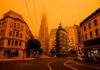
Urban infrastructure amplifies the stakes. Older housing stock with poor insulation and filtration, reliance on open windows for cooling, and limited access to high‑efficiency air purifiers all increase the difficulty of protecting vulnerable residents. Social‑media posts during recent episodes show skylines from Philadelphia to New York described as “dystopian,” but the more consequential images are of people improvising with towels over box fans or riding out the smoke in subway stations. Over time, these experiences nudge cities toward investments in cleaner HVAC, public clean‑air shelters, and building standards that assume smoke days are now part of the summer calendar.
🔥 CANADIAN WILDFIRES BLANKET MIDWEST AND NORTHEAST WITH THICK SMOKE
A news report detailed how Canadian wildfires are sending heavy smoke into the U.S., with the Midwest and Northeast experiencing the worst conditions. Air quality alerts were issued for major cities including… pic.twitter.com/WESVCzfpJd
— Narrative Decoded (@narrative_dc) July 17, 2026
Living with a Smokier Future: Practical and Policy Implications
For individuals, the core practical lessons are straightforward, even if they feel inconvenient. On days when AQI reaches “unhealthy for sensitive groups” or worse, spending less time outdoors, avoiding strenuous exercise outside, using well‑fitting N95 or KN95 masks if exposure is unavoidable, and improving indoor air filtration materially reduce inhaled dose of PM2.5. For people with chronic heart or lung conditions, having a care plan that anticipates smoke days—medication access, telehealth arrangements, and clear thresholds for seeking emergency care—can make these episodes manageable rather than frightening.
At the policy level, the evidence points toward treating Canadian wildfire smoke as a recurring component of North American air quality, not a temporary anomaly to be endured and forgotten. That has implications for cross‑border fire management, including investment in prevention, suppression capacity, and Indigenous‑led prescribed burning practices. It also intersects with climate policy: many of the drivers of expanded fire seasons—warmer temperatures, prolonged drought, insect‑damaged forests—are themselves shaped by global greenhouse gas emissions. Neither better masks nor revised AQI maps will, by themselves, reverse those trends.
Finally, it is worth emphasizing that alerts for 100 million people are not a media creation but a reflection of how interconnected the atmosphere has become with our built environments. A plume originating in remote Canadian timberland can, within days, affect the lungs of a child in Detroit or an older adult in Boston. That reality is now a recurring feature of summers in the Midwest and Northeast. Living well within it means taking the science seriously, resisting the allure of fatigue, and engaging with both personal and collective measures that match the scale of the risk.
Sources:
facebook.com, cnn.com, en.wikipedia.org, youtube.com, cbc.ca, usatoday.com, bbc.com, ctvnews.ca, forbes.com, foxweather.com, abcnews.com, sciencedirect.com, toronto.citynews.ca, canada.ca, nytimes.com, fastcompany.com, news.climate.columbia.edu, aljazeera.com