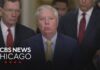
Lindsey Graham’s sudden death has cracked open a fight inside the GOP over how far America should police the world.
Story Snapshot
- Graham was one of Trump’s closest allies in the Senate and a leading foreign policy hawk.
- His death weakens the interventionist, “police the world” wing just as America First conservatives gain ground.
- Ukraine, Israel, and Iran policy could shift as Trump is freed from a powerful pro-war voice in his inner circle.
- The battle over endless wars and defense spending now moves center stage inside the Republican Party.
A Foreign Policy Hawk Suddenly Silenced
Senator Lindsey Graham, the longtime Republican from South Carolina, died suddenly at 71 after suffering an aortic dissection, a tear in the main artery from his heart. He had served in the Senate since 2003 and built a career as one of Washington’s loudest voices for military action overseas. A retired Air Force Reserve colonel, he backed the Iraq War, the troop surge, and later interventions in places like Libya and Syria. For years, he pushed a hard line on Iran, Russia, and other hostile regimes.
Just days before his death, Graham was still on the front lines of foreign policy, traveling to Ukraine and meeting President Volodymyr Zelensky. He pressed for stronger sanctions on Russia and more aid to Kyiv’s war effort, arguing that American leadership abroad keeps us safe at home. He also remained one of the strongest backers of Israel in Congress, calling for tougher military support and even comparing the Iran threat to the fight against Nazi Germany. His voice helped keep Washington locked into costly overseas commitments.
Graham’s Unique Role in Trump’s Inner Circle
Under President Donald Trump, Graham moved from critic to close ally, becoming one of the president’s most trusted partners on Capitol Hill. He played a unique role as both a cheerleader for Trump’s agenda and a strong champion of interventionist foreign policy. Reports describe him as a key adviser to Trump on Iran, Russia, and Ukraine, often urging tougher sanctions and even military options. This made him a kind of bridge between old guard “Reagan-style” hawks and the new populist America First movement.
Politico and other outlets note that Graham often had the president’s ear on war and peace decisions. He was known for phone calls and meetings where he pushed for more pressure on Iran, more weapons for Ukraine, and firm backing for Israel. That access matters. Many senators talk big on cable news, but few can shape what a president actually does. With Graham gone, Trump loses a hawkish friend who blended establishment foreign policy with loyalty to the MAGA base. That mix will be hard to copy.
America First vs. Endless Wars: The Void Graham Leaves
Graham’s death comes at a time when many Republican voters are tired of “forever wars” and trillion-dollar nation-building. Studies of the party’s split show two clear camps: traditional national security hawks who support strong intervention abroad, and America First conservatives who want to focus resources at home. Graham stood almost alone as a major figure trying to keep the old interventionist line alive while staying close to Trump, who often campaigned against those same wars.
Analysts say his passing opens a “hawkish void” inside the GOP, especially on Ukraine and Iran. While other Republicans still back aid to Ukraine and a tough stance on Tehran, few have Graham’s long record or constant media presence. Some former Bush and Trump officials signed letters urging more Ukraine aid, showing there is still elite support for intervention. But those voices are mostly off-camera. Graham was the face of that agenda, and without him it gets easier for America First lawmakers to argue for cutting foreign commitments and refocusing on borders, energy, and our struggling middle class.
What This Means for Trump, Allies, and Conservative Voters
Foreign policy experts say one man’s death rarely forces a full shift in U.S. strategy overnight. Our system is big, and many players shape decisions. But Trump’s current foreign policy already breaks from the old post–World War II consensus and centers more on domestic strength than global management. In that context, losing a top interventionist adviser like Graham nudges the balance further away from policing every conflict overseas and toward a tighter focus on core American interests.
Alright, South Carolina, I have found the right candidate to take over for Lindsey Graham in the Senate, this candidate is solid on Foreign policy and strong in Education…….such ashttps://t.co/xKngsnkEwz
— Dan Cullen (@RealDancinDan1) July 15, 2026
Allies like Kyiv and Tel Aviv may feel new pressure to show they can carry more of their own burden. At the same time, conservative voters who are sick of endless wars may see an opening to demand clearer limits on foreign adventures and wasteful spending. Graham’s career reminds us how easily talk of “freedom” and “democracy” can be used to sell costly interventions that do little for the average American family. His passing closes one chapter of Republican foreign policy—and sets up the next round in the fight over what America should really defend.
Sources:
realcleardefense.com, foxnews.com, abcnews4.com, townhall.com, en.wikipedia.org, easternherald.com, marca.com, independent.co.uk, instagram.com, aljazeera.com, politico.com, responsiblestatecraft.org, pmc.ncbi.nlm.nih.gov, slouchingcolumbia.wordpress.com