A fifteen-second clip from inside a white BMW now raises a bigger question than who pulled the trigger: who controls the truth when a hate-crime massacre collides with viral video?
What Actually Happened At The San Diego Mosque
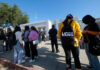
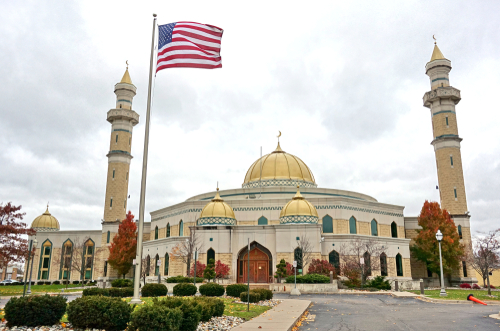
Police in San Diego say two teenage gunmen opened fire outside the Islamic Center of San Diego on May 18, killing three people, including a security guard, before fleeing in a white BMW that was later found with both suspects dead inside from apparent self-inflicted gunshot wounds.[2] Worshippers, including children, were evacuated as law enforcement flooded the area and federal investigators from the Federal Bureau of Investigation (FBI) joined the case, which authorities are treating as a possible anti-Muslim hate crime.[1][2] This is the established, on-the-record backbone.
Reporters and local outlets identified the suspects as 17-year-old Cain Clark and 18-year-old Caleb Vazquez, teenagers who allegedly met online and immersed themselves in extremist content before the attack.[2][3] Police and federal agents seized dozens of firearms from related locations as they began reconstructing the timeline that led from online radicalization to a real-world massacre.[2] That is the grim but tragically familiar part: two young men, a house of worship, and a trail of digital breadcrumbs pointing toward hate.
Inside The BMW: What The Viral Clip Claims To Show
The clip that now dominates online debate reportedly runs about fifteen seconds and appears to be recorded from a dashboard-mounted camera inside a vehicle that matches the description of the suspects’ BMW.[1] The narration says it shows a teenager, allegedly Cain Clark, in tactical-style clothing, seated in the driver’s position, firing toward the passenger side, manipulating the weapon, firing again, then adjusting the gun once more before turning it on himself; a final gunshot sounds and the body slumps forward toward the steering wheel.[1] That sequence, on its face, lines up neatly with the official story of two suspects, one car, and two suicides.
The account pushing the clip most aggressively, an online profile called “Musty Chips,” did not record the incident and has offered no documented chain of custody.[1] Commentators and headline writers describe the footage as “horrifying,” “disturbing,” and “final moments,” language that drives clicks but quietly hedges with words like “allegedly” and “appears.”[1] To a casual viewer, though, the emotional punch of watching a person seemingly shoot himself leaves little room for nuance; the human brain tends to accept vivid video as reality, especially when it matches what we already think we know.
What Investigators Have And Have Not Confirmed
San Diego police and federal investigators have not publicly authenticated the video, have not said who recorded it, and have not confirmed that the person in the clip is definitively one of the mosque suspects.[1] Officials have also not released full autopsy reports, ballistic trajectories, or a detailed scene reconstruction showing exactly how each suspect died inside the BMW.[2] They have acknowledged the teens’ apparent suicides and the car discovery, but they have not bridged the gap between that evidence and this specific fifteen-second file circulating on social media.[2]
From a common-sense, conservative perspective, that gap matters. A society that claims to respect the rule of law should not outsource forensic conclusions to anonymous accounts chasing engagement. At the same time, nothing in the available record affirmatively disproves the clip either. The broader case facts—self-inflicted gunshot wounds, matching ages, a white BMW, escape from the mosque—are consistent with what the video seems to portray.[1][2] The responsible position is sober skepticism: neither reflexive disbelief nor blind acceptance, but a demand for proof.
READ NOW: Horrifying Footage Appears To Show Moment Mosque Shooting Suspect Killed Himself — The California Post has obtained a video purportedly showing the San Diego mosque suspects carrying out their deadly…https://t.co/iz1d4FV8B8
— Top News by CPAC (@TopNewsbyCPAC) May 19, 2026
How Viral Shock Clips Hijack The Story
The speed of this video’s spread illustrates how social media now outruns police work by miles. A graphic clip tagged to a politically explosive hate crime invites instant hot takes: some users cheer the suicides as “justice served,” others frame the footage as evidence of rising fascism, and a few try to pick apart lighting, angles, and muzzle flashes like amateur forensic analysts. The common thread is emotion first, verification later—if ever. That environment rewards certainty and punishes anyone who says “we do not know yet.”
Media outlets, squeezed by the same attention economy, often split the difference with phrases such as “disturbing video allegedly shows,” which legally protects them while still cashing in on the drama.[1] The result is a kind of narrative laundering: a clip born in the rumor mill gradually acquires a veneer of legitimacy as more respectable brands repeat it, even while sprinkling caveats. By the time investigators finish their work—months later, if the pattern holds—the public has already filed the video under “settled fact,” and corrections rarely travel as far as the original outrage.
What A Truth-Seeking Society Should Insist On Next
Citizens who care about both justice for the murdered worshippers and integrity in public discourse should press for specifics, not spin. Authorities should either authenticate the video with released evidence—metadata, timestamps, matching autopsy trajectories, and a documented source—or clearly state that it cannot be verified and should not be treated as conclusive. Families of victims and suspects deserve clarity; the broader public deserves to know whether a viral clip is actual evidence or just a powerful, possibly mislabelled image.
Until that happens, a healthy response for anyone watching this story unfold is disciplined restraint. Accept what has been firmly established: three people are dead, two teenagers apparently killed themselves after attacking a mosque, and investigators are still working.[2][3] Treat everything else, including the dashcam suicide footage, as an open question. A culture that values order, due process, and truth over dopamine hits must be willing to say three unfashionable words in the face of a shocking video: “Not proven yet.”
Sources:
[1] YouTube – San Diego Mosque Shooters’ FINAL Moments EXPOSED
[2] YouTube – US mosque shooting: Two suspects met online; over 30 guns seized
[3] Web – San Diego Islamic Center shooting suspect apparently posted video …