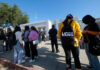
Sixty-two US military veterans, many disabled and in uniform, were arrested inside the Capitol after staging a solemn protest demanding Congress defund what they call an unaffordable and deeply unpopular war on Iran launched by the Trump administration.
Veterans Stage Symbolic Protest Inside Congressional Building
Approximately 60 military veterans and family members assembled Monday inside the Cannon House Office Building rotunda, conducting a traditional flag-folding ceremony to honor fallen US troops while holding red tulips symbolizing Iranian lives lost. Organized by About Face alongside Veterans For Peace, Common Defense, and other coalitions, protesters wore military fatigues and unfurled banners reading “End the War on Iran” and “We Can’t Afford Another War.” Some participants were visibly disabled, underscoring the personal costs of prolonged military conflict. Capitol Police issued dispersal orders after protesters chanted demands targeting congressional war funding, leading to zip-tie arrests of 62 individuals who refused to leave.
Dissent Targets Trump-Netanyahu War Policy
The protest directly challenges the US-Israeli military campaign against Iran launched February 28 under President Donald Trump and Israeli Prime Minister Benjamin Netanyahu. Iraq War veteran Mike Prysner, speaking at the demonstration, characterized the conflict as “deeply unpopular” and an “administration crisis,” reflecting broader frustration among service members who lived through Iraq and Afghanistan deployments. Protesters specifically confronted House Speaker Mike Johnson, identifying Congress as the gatekeeper for continued war funding. The timing coincides with a fragile ceasefire deadline and high-stakes negotiations, amplifying pressure on lawmakers already facing constituent backlash over escalating Middle East tensions and American troop risks.
Military Community Fractures Over Foreign Entanglement
The demonstration exposes a significant rift within the defense community over renewed Middle East intervention. Veterans leveraged their service credentials and symbolic military rituals to challenge policymakers at the heart of American power, framing opposition not as anti-patriotic but as protective of troops and fiscal responsibility. Banners declaring unaffordability resonate with citizens across political divides who question whether elite decision-makers prioritize reelection over addressing domestic economic struggles. The coalition’s inclusion of Military Families Speak Out and disabled veterans adds moral weight, suggesting dissent extends beyond fringe activism to those who bore direct consequences of past wars.
The arrests underscore a broader pattern where government officials enforce order while sidestepping substantive debate on war legitimacy and cost. No official Capitol Police statements or post-arrest charge details were available as of reporting, leaving legal consequences for the 62 detainees uncertain. This silence mirrors long-standing frustrations that elected representatives avoid accountability on decisions affecting millions of working Americans. Whether this veteran-led resistance influences congressional funding votes or policy shifts remains unclear, but it signals growing willingness among military communities to publicly oppose wars they view as serving narrow interests rather than national security or the principles upon which the country was founded.