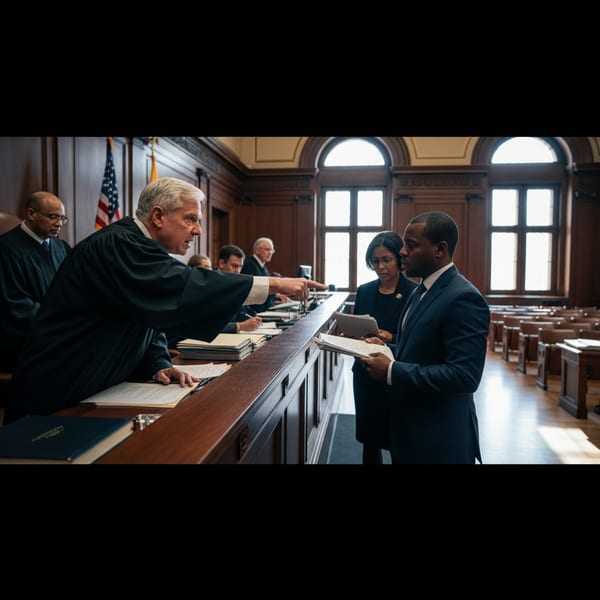
Justice Samuel Alito pressed an attorney representing Haitian nationals during Supreme Court arguments Wednesday, questioning whether race actually drove the Trump administration’s decision to end Temporary Protected Status for multiple countries. The exchange exposed the lawyer’s struggling attempts to categorize people by race.
Justice Questions Racial Classification Logic
Attorney Geoffrey Pipoly argued the Arlington Heights framework showed racial considerations improperly influenced TPS terminations. Alito responded by noting the administration ended protections for numerous countries, none Nordic, but asked whether grouping Syrians, Turks, Greeks, and Mediterranean populations all as “non-white” made sense. Pipoly claimed Syrians weren’t white despite State Department classifications, admitting he hadn’t considered how to racially classify Turks. The courtroom erupted in laughter when Alito asked about Southern Italians and Greeks, both historically excluded from America’s definition of whiteness.
Broad Definitions and Historical Context
Pipoly acknowledged that 120 years ago, Southern Italians and Greeks weren’t considered white during America’s last major European immigration wave, arguing racial concepts evolve over time. Alito criticized this expansive approach to racial classification, stating he disliked dividing people into arbitrary groups. The attorney then shifted strategy, claiming even under rational basis review rather than strict scrutiny, bare dislike of unpopular groups could invalidate the terminations. The exchange highlighted difficulties in proving racial animus when policy affects diverse populations across continents.
Immigration Policy Under Scrutiny
The consolidated cases challenge Trump administration decisions ending protections for Haitian and Syrian nationals who received temporary status due to extraordinary conditions in their home countries. Critics of the racial discrimination argument note TPS exists based on country conditions, not ethnicity. The cases test whether courts can second-guess executive immigration decisions by inferring racial motivations. President Obama previously explained that refugee status requires meeting narrow criteria beyond economic hardship or dangerous neighborhoods, emphasizing legal standards over demographic characteristics in immigration policy.