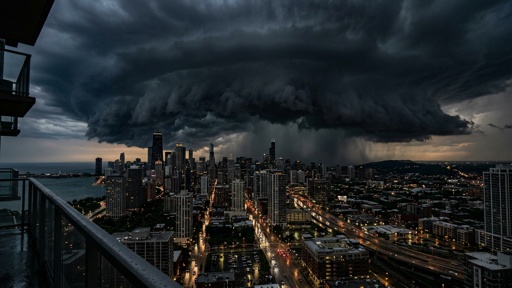
A looming Super El Niño with 100% certainty threatens devastating floods, droughts, and record heat, exposing federal government’s unreadiness to shield Americans from nature’s fury.
ECMWF Forecast Signals Unprecedented Shift
The European Centre for Medium-Range Weather Forecasts released its May 2026 long-range model on early May, showing all ensemble members projecting a Super El Niño by November. This defines as Niño 3.4 sea surface temperature anomalies reaching at least +2.0°C, rarer than standard El Niños occurring every 10-15 years. Probability jumped from 55% in March to 100%, driven by subsurface Pacific warming and weakening trade winds. ENSO currently sits neutral, transitioning after three years of La Niña dominance from 2021-2025.
New ECMWF data shows near a 100 percent chance of a super El Niño by October.
The central equatorial Pacific is forecast to surge 2.7˚C above average by then — approaching record levels — and this major climate event will still be intensifying 🧵 pic.twitter.com/3dxmO4ioid
— Ben Noll (@BenNollWeather) May 6, 2026
Historical Precedents Highlight Real Risks
Super El Niños like 1982/83, 1997/98, and 2015/16 delivered global chaos. The 2015/16 event peaked at +2.6°C, sparking California droughts, Peruvian floods, coral bleaching, and a 0.2-0.4°C global temperature boost despite cooler La Niña baselines. Economic tolls hit $35B in 1997/98 alone from crop failures and disasters. This pattern follows multi-year La Niña cooling that fueled recent Atlantic hurricanes. Now, models eye a potential +2.5°C peak in fall 2026-winter 2027, amplifying 2025’s record heat through reduced cloud cover.
U.S. Impacts Strain Federal Preparedness
Southern U.S. states face wetter conditions and flooding risks in summer-fall 2026, while Pacific storms intensify. Atlantic hurricanes may suppress despite warm seas, offering East Coast relief but shifting threats westward. Farmers brace for 10-20% yield drops; energy sectors grapple with hydropower swings and Panama Canal water shortages. Past events cost $20B+ in agriculture and energy losses globally. With Trump’s second term prioritizing America First resilience, questions mount on whether federal agencies like NOAA and FEMA can counter elite-driven policy distractions.
Some forecasters predict 'super' El Nino conditions during the second half of 2026, with hotter, drier weather across much of Asia and more rain in parts of North and South America. But how likely and extreme will it be? https://t.co/4lJ84D4HS2 pic.twitter.com/r3BHKXCQ0p
— Reuters (@Reuters) May 6, 2026
Stakeholders and Expert Consensus
ECMWF leads forecasting, influencing NOAA and USDA crop outlooks. Climate experts like UCLA’s Daniel Swain confirm signs of a significant El Niño, urging caution on early spring model limits. Severe Weather EU calls it an “atmospheric code red” with record intensity. Governments in U.S., Peru, and Australia prepare for $30-50B potential damages, affecting insurers and coastal residents. Optimists highlight hurricane suppression; skeptics await June updates, but consensus points to high-impact disruption testing limited government’s role in safeguarding citizens.
Broader Implications for American Heartland
This Super El Niño underscores shared frustrations across political lines: federal bureaucracy often prioritizes elite interests over practical defenses for hardworking families. Wetter South contrasts La Niña droughts, hitting agriculture where overspending and globalism already strain resources. As Republicans hold Congress, demands grow for fossil fuel reliability to power through energy variability, rejecting renewable mandates that hike costs. Both conservatives wary of deep state inaction and liberals eyeing welfare cuts agree: government fails when nature strikes hardest.